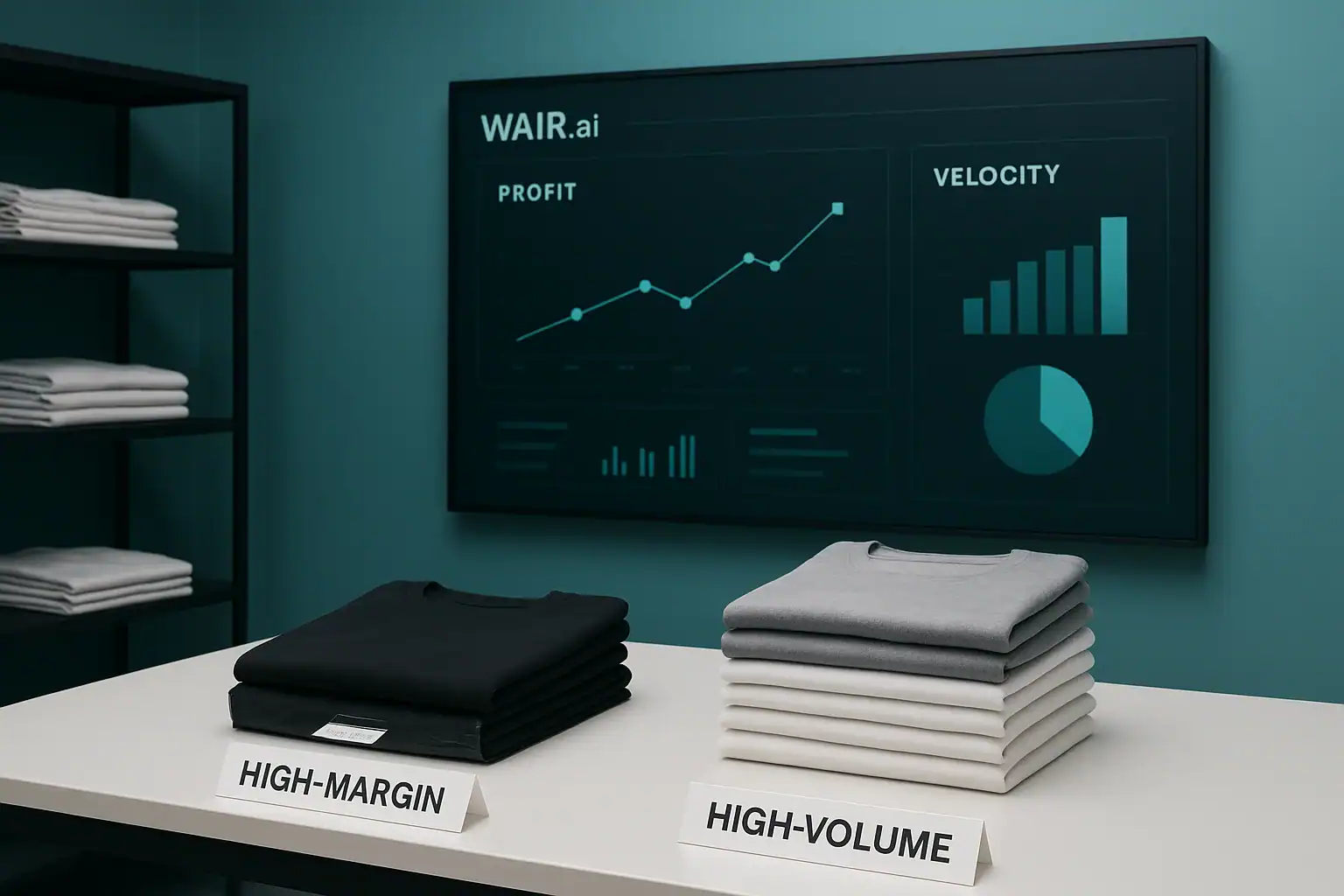
Getting a new collection into stores feels like a finish line, but it’s really the starting gun for profitability. For years, fashion retailers have relied on “fair share” allocation, spreading inventory based on historical sales volume. This approach feels safe, but it quietly seeds inventory with future problems, leading to overstock in one store and missed sales in another. In today’s market, where lead times have shrunk from 263 days to just 102, this outdated method is no longer just inefficient, it’s a direct threat to your margins.
Strategic initial allocation moves beyond simple distribution. It’s a data-driven discipline that places the right product, in the right size, at the right store, at the very beginning of its lifecycle. This isn’t about fairness, it’s about maximizing full-price sell-through and preventing the markdown death spiral before it even begins.
The new reality shaping every allocation decision
The fashion landscape is shifting under our feet, and your allocation strategy must adapt or be left behind. Several powerful trends are converging, making precision inventory placement more critical than ever. With offline stores still driving nearly 72% of fast fashion revenue and e-commerce projected to grow at over 11% annually, balancing inventory across channels is a high-stakes game.
These shifts create a complex environment where traditional planning falls short.
- Tighter buys and focused collections:
Brands are increasingly developing focused capsule collections, which grew from 19% to 37% of assortments in just two years, while evergreen styles now represent 49% of gross merchandise value. This means every allocation choice carries more weight.
- Omnichannel inventory pressure:
Customers expect seamless access to products online and in-store, making inventory imbalance a primary challenge. A winning strategy requires a single view of stock and the intelligence to place it where it creates the most value.
- The high cost of poor fit:
Sizing inconsistencies account for up to 70% of apparel returns, polluting your demand data and skewing future forecasts. Integrating fit technology, which can cut returns by half, is becoming essential for accurate demand sensing.
- The rise of the circular economy:
With the secondhand market growing three times faster than firsthand, allocation strategies must begin to account for reverse logistics and recommerce, transforming a cost center into a potential revenue stream.
Phase one precision allocation at the foundational layer
To win in this new environment, you need to move from broad strokes to granular detail. A modern, AI-driven approach to initial inventory allocation treats each product launch as a unique optimization problem, ensuring every unit is positioned to maximize its potential from day one. This starts by building a much deeper understanding of demand.
How can you forecast demand with this level of accuracy? It involves layering advanced analytical models to see what traditional methods miss.
- Hierarchical demand modeling:
Instead of forecasting at the style-color level, true precision comes from predicting demand at the SKU x Size x Store level, factoring in local events, weather, and social trends.
- Micro segmented size curve learning:
A universal size curve is a recipe for overstock and stockouts. Agentic AI develops dynamic size profiles for specific store clusters and demographics, ensuring each location gets the size run its customers actually buy, which is key to improving size curves and sell-through.
- Censored demand analysis:
When an item stocks out, you lose more than a sale, you lose the data. Advanced models infer this “censored” demand by analyzing signals like online page views and waitlist sign-ups to build a more accurate picture of true customer interest.
- Constraint aware optimization:
Your business has real-world constraints like store capacity, prepack configurations, and presentation minimums. An effective allocation strategy doesn’t ignore these, it builds them into the optimization model to deliver a plan that is not only profitable but also operationally feasible.
Phase two dynamic in-season agility
A perfect initial allocation provides a strong start, but market conditions change. The ability to react intelligently in-season is what separates leaders from the pack. Static plans become obsolete the moment goods hit the floor. A dynamic approach allows you to make continuous, data-driven adjustments that protect margins and keep inventory productive.
This requires moving beyond weekly reports and empowering your team with real-time insights and automated execution. With a clear view of performance across all locations, you can surgically move inventory to where it has the highest chance of selling at full price. This might involve strategic store-to-store transfers or pulling stock back to a central e-commerce fulfillment hub. The goal of this in-season stock allocation is to maximize the lifecycle margin of every single item.
Leveraging advanced signals for smarter demand forecasting
Historical sales data is no longer enough. The most accurate demand forecasts now integrate a rich tapestry of non-traditional data signals that provide leading indicators of where trends are heading. By listening to what the market is saying right now, you can anticipate demand shifts before they show up in sales reports.
This is where the synergy of human expertise and machine intelligence shines. Merchandisers can identify emerging trends, while AI quantifies their potential impact across different regions and customer segments. Some of the most powerful new data sources include social listening on platforms like TikTok and Instagram, analysis of internal site search queries and wishlist additions, and data from influencer campaigns that can create localized demand spikes. Incorporating these signals is a key part of modern demand forecasting in fashion.
Transform your allocation from a cost center to a profit engine
Shifting from a legacy allocation process to a strategic, AI-driven framework is one of the most impactful investments a fashion retailer can make. It transforms a routine operational task into a powerful engine for profitability and sustainable growth. By placing inventory with precision, reacting dynamically to in-season trends, and leveraging advanced data, you directly reduce markdowns, increase full-price sell-through, and build a more resilient business.
The tools and strategies to achieve this are no longer theoretical, they are practical solutions being deployed by forward-thinking brands today. The first step is recognizing that “good enough” allocation is costing you more than you think. If you’re ready to explore how agentic AI can refine your inventory placement optimization, WAIR.ai can help you build a roadmap for success.
Frequently asked questions
Q: How does strategic allocation differ from what our current ERP system does?
A: Most ERP systems handle allocation based on simple rules and historical sales percentages. A strategic approach, powered by agentic AI, uses predictive models that incorporate dozens of variables, from weather and local events to censored demand and dynamic size curves, to optimize for future profit, not just replicate past performance.
Q: Is implementing an AI allocation system too complex for our existing team?
A: Modern AI solutions are designed for business users, not just data scientists. WAIR.ai’s tools translate complex calculations into clear recommendations and automated actions that your merchandising and planning teams can manage and execute confidently. The focus is on human-AI collaboration to enhance, not replace, their expertise.
Q: Can this approach work for both new product launches and replenishment?
A: Absolutely. The underlying principles of demand forecasting and optimization apply to both. For initial allocation, the system models the product launch lifecycle. For replenishment, it uses real-time sales data to maintain optimal stock levels, ensuring you never miss a sale while preventing overstock.
Q: What is the first step to improving our allocation process?
A: The first step is to benchmark your current performance. Analyze your sell-through rates by store, markdown depth, and frequency of stockouts. This data will reveal the financial impact of allocation inefficiencies and build a strong business case for adopting a more intelligent, strategic approach.