Imagine two stacks of boxes in a warehouse corner, both at risk of becoming dead stock. One stack contains a slow-moving but highly profitable line of cashmere sweaters. The other holds a massive volume of basic cotton t-shirts that sell quickly but offer razor-thin margins. With limited time and resources, which stack do you prioritize for redistribution to other stores where they might sell? This is a classic retail dilemma that pits profit against velocity.
Historically, this decision relied on spreadsheets, experience, and intuition. Today, agentic AI transforms this guessing game into a precise, data driven strategy. It moves beyond simple logic to analyze dozens of variables, helping you understand not just which items to move, but how those moves impact your ultimate financial goals. This guide will demystify how AI makes these critical choices, balancing the scales between high margin and high volume inventory to protect your bottom line.
Understanding the core inventory trade off
Before diving into how AI solves the problem, it is essential to grasp the two competing priorities at the heart of inventory management. Every product in your catalog represents a strategic choice between prioritizing profit per item or the speed at which items sell through.
What is high margin inventory
High margin inventory includes products that generate significant profit on each sale. These are often luxury goods, exclusive collections, or specialized items with a higher price point and lower production cost. While profitable, they typically have a lower sales velocity, meaning they sell less frequently. The primary benefit is a stronger contribution to gross profit with every unit sold, but the risk lies in tying up capital in slow moving stock.
What is high volume inventory
High volume inventory, or high velocity inventory, consists of items that sell quickly and consistently. These are your bestsellers, core basics, and promotional products. While the profit on each individual item is low, their rapid turnover generates steady cash flow and high sell through rates. The main advantage is liquidity and market presence, but the risk involves lower overall profitability and the need for constant replenishment to avoid stockouts.
The ultimate goal is not just to sell products, but to maximize the return on the money you have invested in that inventory. This is where a crucial metric, Gross Margin Return on Investment (GMROI), comes into play. It measures how much gross margin you earn for every dollar invested in inventory, effectively balancing both profit and turnover. A smart AI-driven inventory imbalance redistribution strategy is fundamentally about optimizing for GMROI across your entire network.
How AI prioritizes at risk inventory for redistribution
When inventory is flagged as “at risk” due to slow sales in one location, AI does not just see a product that needs to be moved. It sees a complex optimization problem. The AI’s decision engine evaluates potential redistribution moves based on a predefined business strategy, or “objective function,” which you configure. It weighs the costs of moving an item against the potential reward, considering dozens of data points in real time.
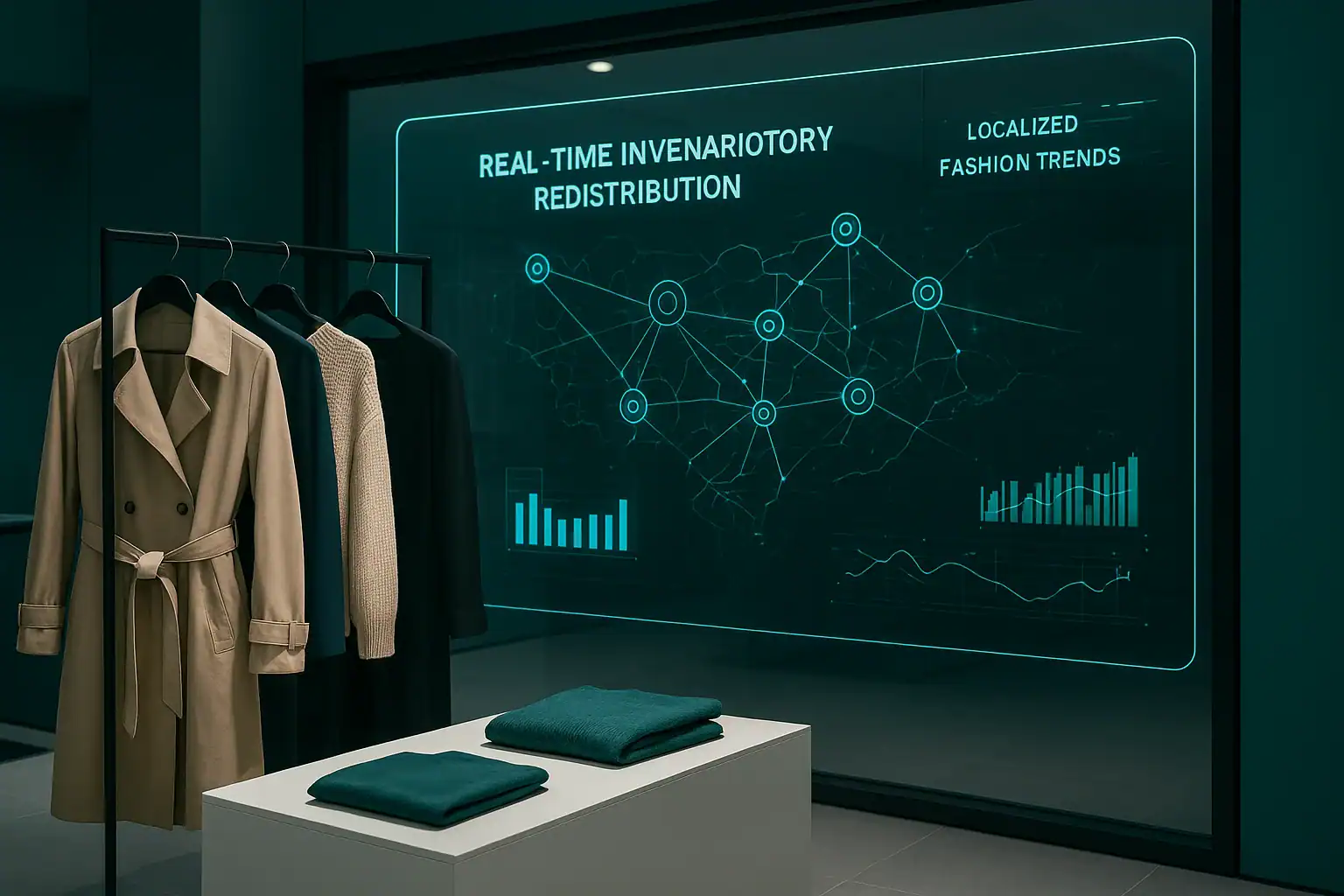
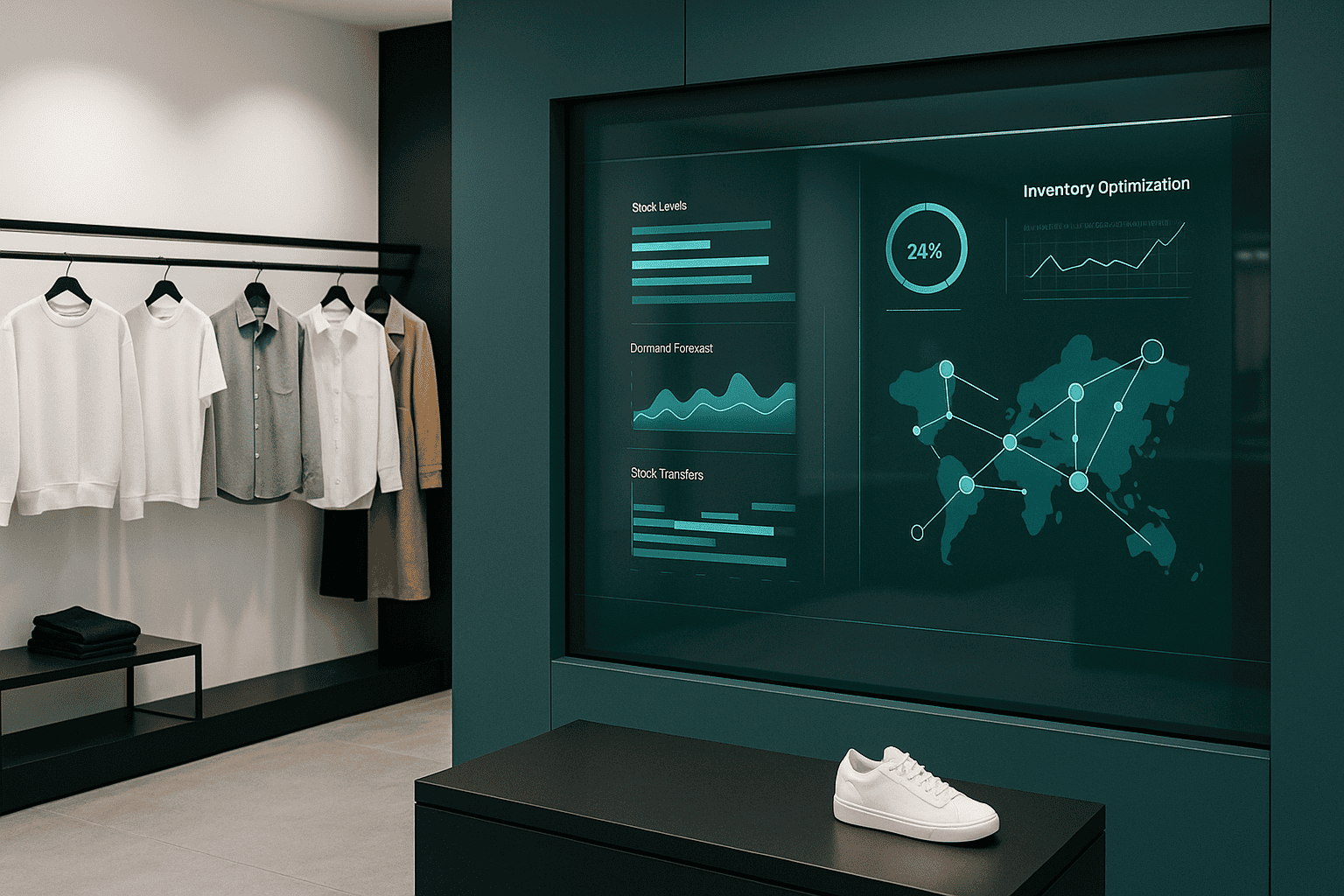
This process involves a sophisticated analysis that goes far beyond simple rules. An AI Redistributor analyzes demand signals, holding costs, transfer logistics, and potential markdown risk to determine the single best action for every at-risk SKU.
The AI’s decision making framework is guided by several key inputs and strategic goals. These elements work together to ensure that redistribution choices align perfectly with broader business objectives, whether that is protecting margins or accelerating cash flow.
If your strategy is to protect margins, the AI will prioritize moving high margin items to locations where predictive analytics show a strong likelihood of selling at or near full price.
If the goal is to improve cash flow and liquidate stock, the AI will focus on redistributing high volume items to stores where they will sell through the fastest, even if it means a lower profit.
This is the most balanced approach, where the AI calculates which moves will generate the highest GMROI, a key metric for retail optimization and profitability, considering both margin and turnover to find the most financially efficient solution.
The AI identifies items with the highest risk of becoming dead stock and prioritizes their redistribution to mitigate potential losses from heavy markdowns or write offs.
Configuring AI to reflect your business strategy
One of the most common misconceptions about AI is that it is a black box that makes decisions on its own. The reality is that agentic AI is a powerful tool that you configure to execute your specific business strategy. You do not just turn it on, you teach it what to prioritize. This is crucial when dealing with the strategic management of excess and at risk inventory.
For example, a fast fashion brand nearing the end of a season might configure its AI to prioritize velocity, aiming to sell through trendy items quickly before they become obsolete. Conversely, a luxury brand might instruct its AI to always prioritize margin protection, ensuring its premium products are never moved to a location where they are likely to be discounted. This level of customization allows how agentic AI delivers predictive inventory turn optimization for fashion retail to be tailored to unique business needs.
The true power of AI lies in its ability to simulate these different strategies. Before committing to a redistribution plan, you can run “what if” scenarios to see the projected impact on profit, sell through, and cash flow. This allows you to visualize the outcome of prioritizing high margin items versus high volume ones, empowering you to make informed, data backed decisions and accurately start measuring AI redistribution business impact before you even implement a change.
From reactive transfers to predictive profit optimization
Ultimately, choosing between high margin and high volume inventory is not an either or decision. It is a dynamic balancing act that changes based on seasonality, product lifecycle, and overall business goals. Relying on human intuition alone makes this process slow, inconsistent, and prone to error.
Agentic AI elevates inventory redistribution from a reactive logistical task to a proactive, strategic tool for profit optimization. By analyzing vast datasets and modeling future outcomes, AI provides clear, actionable recommendations that align with your financial objectives. It ensures that every inventory move is the most intelligent one possible, protecting your margins, improving your sell through, and maximizing the return on every dollar you invest in your products. Ready to discuss how we can balance your inventory using AI? Schedule a meeting with our experts.
Frequently asked questions
Q: What is the main difference between high margin and high volume inventory?
A: High margin inventory generates more profit per item but sells slowly, while high volume inventory sells quickly but generates less profit per item. The former boosts profitability, while the latter improves cash flow.
Q: How does AI decide which type of inventory to move first?
A: AI uses an “objective function,” which is a set of rules and priorities you define based on your business strategy. It analyzes data like demand forecasts, holding costs, and sell through rates to recommend redistribution moves that best align with your goals, whether that is maximizing profit, velocity, or a balance of both.
Q: Can AI help reduce the need for markdowns?
A: Yes. By proactively redistributing at risk inventory to locations with higher demand, AI helps items sell at a better price. This strategic balancing reduces the pile up of slow moving stock that typically leads to end of season markdowns.
Q: Is AI inventory redistribution difficult to implement?
A: Modern agentic AI solutions are designed for business users, not just data scientists. Implementation involves integrating your data sources and configuring the AI’s decision engine to reflect your strategic priorities, a process that is often guided by the AI vendor to ensure it aligns with your operational workflow.