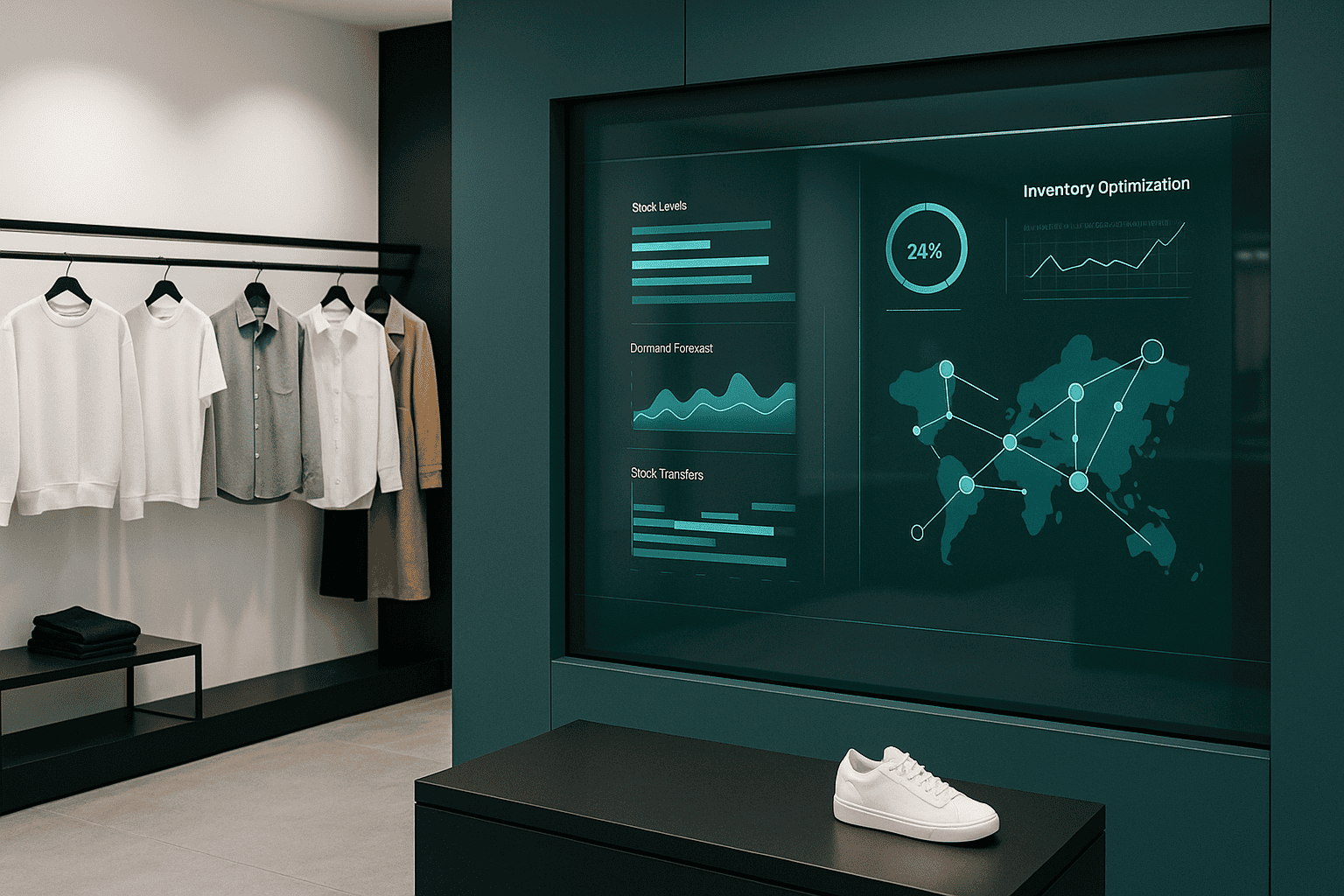
Navigating the complexities of modern retail demands more than a one size fits all approach, it requires precision, foresight, and a deep understanding of local market nuances. As consumer preferences fragment and competition intensifies, relying on generic assortment strategies can lead to significant overstock, missed sales opportunities, and diminished profitability. This is where advanced store clustering for localized assortment planning becomes not just beneficial, but a strategic imperative.
Localized assortment planning tailors product offerings to the specific demands of individual stores or distinct groups of stores, moving beyond broad regional categorizations. When powered by sophisticated artificial intelligence and machine learning, this approach allows retailers to precisely match inventory to actual customer preferences and environmental factors, significantly enhancing customer satisfaction and driving measurable sales uplift. Retailers leveraging data driven, localized assortment planning have experienced sales increases of 10 to 20%, highlighting the transformative potential of this strategy.
Decoding store clustering, the foundational concepts
Store clustering is the practice of grouping retail locations based on shared characteristics, effectively turning a vast network of stores into manageable, actionable segments. Traditionally, this process relied on manual analysis and broad categorizations, often missing the subtle yet critical differentiators that impact local demand. Advanced clustering, however, leverages AI and machine learning to analyze vast datasets, revealing intricate patterns and relationships that human analysts simply cannot discern at scale.
This evolution from traditional to AI driven clustering marks a critical shift for retailers. Manual methods, while intuitive, are prone to human bias, limited by data volume, and struggle to adapt to dynamic market changes. AI driven approaches overcome these limitations by processing billions of data points across multiple dimensions, continuously learning and refining clusters to reflect real time market conditions.
The foundation of effective store clustering lies in identifying the right dimensions for segmentation. These can include a wide array of factors:
Analyzing product velocities, category performance, and seasonal trends unique to each store.
Understanding local population density, income levels, age groups, and cultural preferences.
Accounting for regional variations that influence demand for specific products.
- Store capacity and layout:
Considering physical constraints, visual merchandising potential, and storage limitations.
Identifying how quickly products move through different stores.
- Local events and holidays:
Recognizing community specific occurrences that drive purchasing spikes.
Mapping the presence and performance of local competitors.
By segmenting stores into homogeneous clusters, retailers can develop highly relevant assortments that speak directly to their local customer base, minimizing inefficient inventory allocation and maximizing sell through.
The AI/ML toolkit for advanced store clustering
The power of advanced store clustering stems from its reliance on unsupervised machine learning, a category of AI that identifies patterns in data without explicit prior labeling. These algorithms are adept at discovering inherent groupings among stores based on their complex, multidimensional characteristics.
Some of the key machine learning algorithms employed in advanced store clustering are:
This algorithm partitions data into a predefined number of clusters, aiming to minimize the variance within each cluster. Each data point is assigned to the cluster whose mean is closest.
It is relatively simple to implement, computationally efficient, and scales well to large datasets.
It requires the user to specify the number of clusters (K) in advance and is sensitive to outliers. It also assumes that clusters are spherical and evenly sized, which may not always be true in complex retail data.
Ideal for initial segmentation by clear metrics like sales volume tiers or store size groups.
This method builds a hierarchy of clusters, either by starting with individual data points and merging them into clusters (agglomerative) or by starting with one large cluster and recursively dividing it (divisive). The result is often visualized as a dendrogram.
It does not require a predefined number of clusters, offering flexibility in exploring different levels of granularity. The dendrogram provides a clear visual representation of cluster relationships.
It can be computationally intensive for very large datasets and is sensitive to noise and outliers.
Useful for understanding natural groupings in smaller datasets or when a hierarchy of store types (e.g., flagship, urban, suburban) is desired.
- DBSCAN (Density Based Spatial Clustering of Applications with Noise):
DBSCAN identifies clusters based on the density of data points. It groups together points that are closely packed together, marking as outliers points that lie alone in low density regions.
It can discover clusters of arbitrary shapes, unlike K Means, and is robust to noise, identifying outliers effectively. It does not require the number of clusters to be specified beforehand.
Its performance depends heavily on two user defined parameters (epsilon, minimum points), and it can struggle with clusters of varying densities.
Excellent for identifying niche store clusters with unique, perhaps less obvious, local characteristics or for detecting anomalies.
- Gaussian Mixture Models (GMM):
GMMs assume that data points within a cluster are generated from a Gaussian distribution. Instead of hard assignments, GMMs assign a probability that a data point belongs to each cluster (soft clustering).
Offers soft clustering, which can be more informative by showing degrees of membership. It is more robust to varying cluster densities and shapes than K Means.
It is more computationally expensive than K Means and assumes that clusters follow Gaussian distributions. The number of components (clusters) still needs to be chosen.
Suitable when stores naturally fall into overlapping segments, or when understanding the probabilistic membership of a store to multiple clusters is valuable.
- Self Organizing Maps (SOM):
A type of artificial neural network that performs dimensionality reduction and clustering. It maps high dimensional data onto a lower dimensional (typically 2D) grid, preserving topological relationships.
Excellent for visualizing complex, high dimensional store characteristics in an easily interpretable 2D map. It reveals inherent relationships and similarities between stores.
Training can be time consuming, and parameter tuning requires expertise. Interpreting the map can sometimes be challenging without domain knowledge.
Ideal for exploratory data analysis, revealing latent relationships among stores, and providing a visual overview of a store network’s diversity.
Our overview helps identify the ideal algorithm based on data characteristics, computational resources, and desired interpretability. For example, while K-Means might be a good starting point for large datasets with clearly separable clusters, more nuanced approaches like GMMs or DBSCAN could uncover more intricate, valuable segments in complex retail environments. An agentic AI company can help navigate these choices for advanced store and channel clustering with AI, ensuring the appropriate methodology aligns with your business objectives.
Building robust store clusters, practical implementation guide
Implementing advanced store clustering involves more than just selecting an algorithm, it requires careful data preparation, thoughtful feature engineering, and rigorous validation to ensure the clusters are both meaningful and actionable.
Data acquisition and pre-processing
The foundation of robust clustering lies in comprehensive, clean data.
Gather information from various systems, including Point of Sale (POS), Customer Relationship Management (CRM), Enterprise Resource Planning (ERP), and external sources like weather APIs and demographic databases.
Address inconsistencies, duplicates, and errors. This often involves automated scripts to standardize formats and manual checks for critical values.
Employ strategies like imputation (replacing missing data with estimated values) or exclusion, depending on the data’s nature and the extent of missingness.
- Normalization and scaling:
Ensure all features contribute equally to the clustering process by scaling them to a common range (e.g., 0 to 1) or standardizing them to have a mean of 0 and a standard deviation of 1.
Feature engineering for retail
Raw data often needs transformation into features that are more meaningful for clustering.
Normalize sales data by store size to compare productivity across different store formats.
Create ratios like “percentage of local population aged 25-45” to capture relevant customer segments.
- Product category penetration:
Calculate the percentage of sales attributed to specific product categories within each store, indicating local preferences.
- Inventory velocity metrics:
Develop features like average days of supply per SKU to understand product movement.
Determining the optimal number of clusters (K)
For algorithms like K Means, selecting the right number of clusters is crucial.
Plot the within cluster sum of squares (WCSS) against the number of clusters. The “elbow point” where the rate of decrease significantly slows suggests an optimal K.
Measures how similar a data point is to its own cluster compared to other clusters. Higher scores indicate well defined, separated clusters.
Compares the WCSS of the actual data to that of randomly generated data, helping to identify the K value where the difference is maximized.
Cluster validation and interpretation
Once clusters are formed, their quality and practical relevance must be assessed.
- Metrics for evaluating cluster quality:
Use internal metrics (like WCSS for K Means) and external metrics (if ground truth labels are available) to quantify cluster cohesion and separation.
Deeply understand the “DNA” of each store group by analyzing the average values of the input features for all stores within that cluster. This helps merchandising teams understand why certain stores are grouped together.
Use scatter plots, heatmaps, and geographic maps to visualize clusters and identify any logical inconsistencies.
Dynamic clustering and re-evaluation
Retail environments are not static, so clusters must adapt.
Re evaluate clusters periodically (e.g., quarterly or bi annually) or when significant market shifts occur, such as a new competitor entering a region or major demographic changes.
- Managing cluster migration:
Develop strategies for smoothly transitioning stores from one cluster to another, which might involve phased assortment changes to minimize disruption.
Measuring the impact of quantifying sales lift from localized assortment
While anecdotal evidence can be compelling, demonstrating tangible ROI from localized assortment planning requires rigorous measurement. Retailers leveraging AI driven assortment planning can achieve a 1 to 2% lift in sales and margin improvements of up to 4%.
Key Performance Indicators (KPIs) for localized assortment strategies provide a clear picture of success:
- Inventory turn by cluster:
An in depth look at how quickly inventory sells and is replaced within each specific store cluster.
This metric indicates efficient stock management, with higher turns generally signifying better sales performance and less capital tied up in inventory.
The percentage of inventory sold versus the amount received over a specific period, analyzed at the cluster level.
A higher sell through rate for localized assortments validates that the products offered are highly relevant to the local customer demand, reducing the need for markdowns.
A quantifiable decrease in the value or volume of products sold at a discount within clustered stores.
This directly reflects improved demand forecasting and allocation, as fewer products are overstocked or mismatched to local preferences.
- Customer satisfaction scores:
Surveys or feedback mechanisms that gauge customer satisfaction directly related to product availability and relevance in specific stores.
Higher scores indicate that localized assortments are meeting customer expectations and enhancing the shopping experience.
- Methodologies for precisely measuring sales lift include:
A/B testing across clusters: Implement a localized assortment strategy in one cluster (the “test” group) and maintain a traditional assortment in a comparable cluster (the “control” group). Compare sales, margin, and inventory metrics over time.
Carefully select a subset of stores that are not part of the localized strategy but share similar characteristics to the clustered stores, serving as a baseline for comparison.
Employ statistical techniques to isolate the specific impact of localized assortments from other influencing factors, providing a more accurate assessment of the strategy’s true effect.
Leveraging these KPIs for strategic retail management and measurement techniques allows retailers to move beyond assumptions, providing concrete data that validates the strategic value of advanced store clustering.
Challenges and solutions in advanced store clustering
While the benefits are clear, implementing advanced store clustering presents its own set of challenges. An agentic AI company understands these hurdles and offers practical solutions.
Data quality and integration
Fragmented data across disparate systems (POS, ERP, CRM) leading to inconsistent or incomplete information.
Establish a robust data governance framework and invest in data integration platforms. Centralizing data into a unified data lake or data warehouse provides a single source of truth for AI models.
Model interpretability
Complex machine learning models can be seen as “black boxes,” making it difficult for merchandising teams to understand why stores are grouped a certain way.
Focus on explainable AI (XAI) techniques. Provide clear visualizations, cluster profiling reports, and user friendly dashboards that highlight the key features driving cluster formation. Facilitate collaboration between data scientists and merchandisers.
Organizational alignment and change management
Resistance to change from traditional merchandising teams or a lack of understanding regarding AI’s capabilities.
Foster a culture of data literacy and collaboration. Provide training and workshops to upskill teams, demonstrating how AI augments their expertise rather than replaces it. Showcase early wins to build trust and momentum.
Scalability and automation
Manually managing clusters and localized assortments across a large network of stores is unsustainable.
Partner with an agentic AI company, like WAIR.AI, that offers scalable solutions designed for retail. These platforms automate data processing, clustering, and assortment recommendations integrating AI into your retail tech stack, freeing up human planners for strategic decision making.
The future of localized assortment AI and beyond
The evolution of localized assortment planning continues at a rapid pace, driven by advancements in AI. The future promises even greater precision and efficiency.
- Generative AI for product and assortment simulation:
Imagine AI generating new product variations or simulating how different assortments would perform in specific clusters before any physical inventory is ordered. This reduces risk and accelerates product development.
- Real time, adaptive assortment optimization:
Future systems will continuously monitor local demand signals, weather patterns, and competitive actions to make real time adjustments to assortments, even down to individual SKU levels within a store.
- Integration with supply chain and sustainability goals:
Localized assortments, driven by AI, can significantly reduce waste from overstocking and transportation, aligning perfectly with growing consumer and corporate sustainability initiatives. This also supports the broader goals of AI in inventory and supply chain for lifestyle retail.
By mid 2025, 87% of retailers implemented AI technology in at least one business area, with 80% of executives planning further automation by year end. This indicates a clear trajectory towards more integrated, intelligent retail operations.
Embrace hyper localization to transform your retail strategy
The journey toward hyper localized assortment planning through advanced store clustering is a strategic move that delivers significant competitive advantage. It moves retailers beyond generic strategies, allowing them to tap into the unique potential of each local market. By embracing AI and machine learning, you can unlock unparalleled insights into consumer behavior, optimize inventory allocation, reduce markdowns, and ultimately drive sustainable growth.
The decision to invest in advanced clustering methodologies is an investment in your future profitability and customer loyalty. It’s about empowering your merchandising teams with the tools to make data driven decisions at scale, ensuring every store delivers a tailored, compelling shopping experience. As an agentic AI company, WAIR.ai helps fashion and lifestyle retailers harness the power of AI to transform inventory management and content creation, directly impacting your bottom line. To explore how you can leverage these advanced solutions, consider scheduling a meeting with our experts.
Frequently asked questions
Q: What is the primary benefit of advanced store clustering for retailers?
A: The primary benefit is the ability to create highly relevant, localized assortments that directly cater to the specific demands and characteristics of different customer segments, leading to increased sales, reduced overstock, and improved customer satisfaction.
Q: How does AI enhance traditional store clustering methods?
A: AI enhances traditional methods by processing vast amounts of diverse data, identifying complex patterns beyond human capability, providing dynamic and continuous re-evaluation of clusters, and offering more precise demand forecasting, which ultimately leads to better assortment decisions.
Q: What types of data are used for AI driven store clustering?
A: AI driven store clustering utilizes a wide range of data, including sales transactions, customer demographics, local weather patterns, store operational data (e.g., capacity), product attributes, and external market trends.
Q: How often should store clusters be re-evaluated?
A: Store clusters should be re-evaluated periodically, typically quarterly or bi annually, or whenever significant market shifts, seasonal changes, or major external events occur that might alter local customer behavior or store performance.
Q: Can localized assortment planning reduce markdowns?
A: Yes, highly localized assortment planning, especially when driven by AI, significantly reduces markdowns by ensuring that the right products are in the right stores at the right time, minimizing overstock and products that fail to sell at full price.