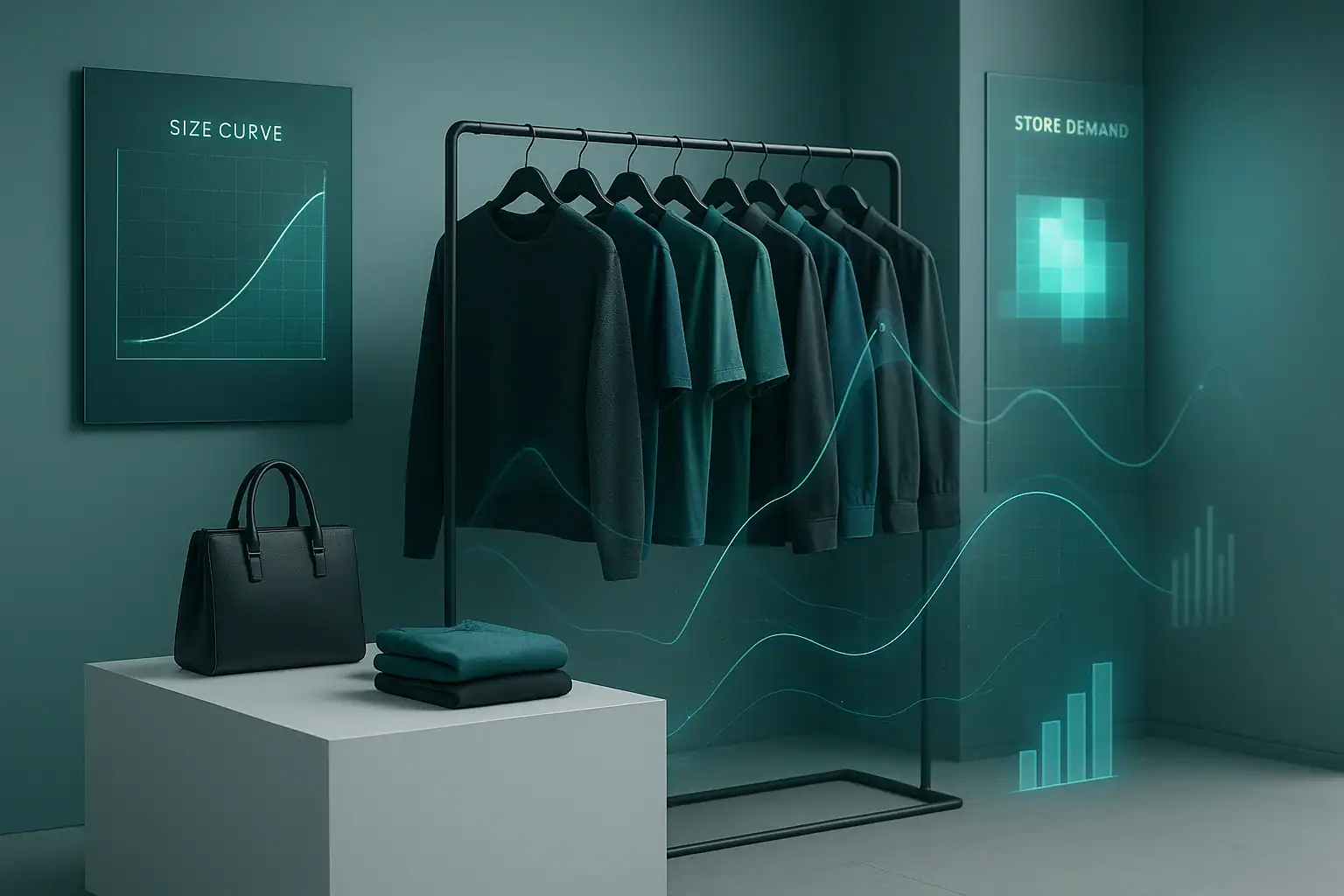
Opening a new retail store presents an exhilarating opportunity, but it often comes with a significant challenge, strategic inventory planning without the benefit of historical sales data. You are tasked with making crucial decisions about what to stock, how much to order, and when to replenish, all while navigating an environment of uncertainty. The stakes are high, as poor inventory decisions can lead to crippling overstock, missed sales due to stockouts, and margin erosion from excessive markdowns. In fact, inventory distortion, which includes both overstocks and out-of-stocks, cost global retailers an estimated $1.77 trillion in 2023. A mere one percent planning error for a billion-dollar retailer can translate into $10 million in at-risk revenue, underscoring the financial peril of getting it wrong. The good news is that with strategic foresight and the right frameworks, you can build early momentum and ensure your new store is set up for long-term success.
Foundations for a confident launch, setting up for success before day one
Before a single product hits your shelves, establishing a robust foundation for inventory planning is paramount. This involves deep market understanding and smart data leveraging supported by inventory data strategic planning.
Understanding your new market’s DNA
Successful new store inventory planning begins with rigorous market intelligence. You need to gather insights that act as a surrogate for missing historical data.
To gain this understanding, consider these initial steps:
- How to conduct hyper-local market research:
Analyze foot traffic patterns, research local events and festivals that could influence demand, and identify complementary businesses in the vicinity. This helps paint a picture of potential customer flow and interests.
Go beyond surface-level data by utilizing census information, reports from local business associations, and any available online customer data if you have an existing e-commerce presence. Understanding the age, income, lifestyle, and preferences of your target demographic is critical.
- Competitive assortment dissection:
Observe what local competitors are selling, their price points, and their promotional strategies. This intelligence helps you identify gaps in the market and validate assumptions about product demand.
The like-for-like imperative, borrowing data intelligently
When historical data is absent, looking to similar contexts becomes your most powerful tool. This “like-for-like” approach involves identifying proxies that can inform your initial inventory decisions.
Consider these methods for borrowing data intelligently:
- Leveraging data from similar existing stores:
If you have other locations, analyze their performance by grouping stores by demand patterns, considering factors like size, climate, demographics, and product category clusters. This helps you understand how similar environments behave.
- Using online sales data as a proxy:
For many retailers, online sales can offer valuable insights into initial demand, especially for brand recognition and product popularity, even if physical store traffic varies. Remember that online and in-store customer behavior can differ, so treat this as a strong indicator, not a definitive forecast.
- Building analog models from competitor data and industry benchmarks:
Supplement your internal analysis with broader industry trends and competitor sales data. This can provide a realistic baseline for product categories and expected sales velocities in new markets.
Transforming inventory data into strategic business planning is an ongoing process that fuels growth and profitability.
Crafting your initial assortment
With a foundational understanding of your market, the next step is to curate your initial product assortment. This phase requires balancing strategic depth and breadth with a willingness to take calculated risks.
The 80/20 rule reimagined for new stores
While the traditional 80/20 rule (80% of sales come from 20% of products) applies universally, for new stores, it’s about identifying those potential core bestsellers. Focus on products that align with industry trends, have performed well in comparable environments, or are perceived to have high market demand based on your research. This ensures your initial stock includes items likely to drive early revenue.
Strategic assortment depth and breadth
Determining the right initial SKU count and variety is crucial. This decision should carefully consider your store size, your target customer profile, and your brand identity. For example, a boutique might opt for less breadth but greater depth in specific, curated categories, while a larger lifestyle store might aim for broader categories with moderate depth. This AI strategic retail assortment planning can significantly impact your early success.
Hypothesis-driven stocking
Without historical data, every inventory decision for a new store is, in essence, a hypothesis. Treat your initial inventory as a set of testable assumptions about customer preferences and demand. This approach allows you to closely monitor performance and quickly validate or refute these hypotheses with real-world sales data.
Safety stock for the unknown
Calculating intelligent safety stock levels becomes particularly important when demand is uncertain. Safety stock acts as a buffer against unexpected surges in demand or supply chain disruptions. While traditional methods rely on demand variability, for new stores, it requires a more qualitative assessment based on product importance, lead times, and the cost of a stockout versus the cost of holding excess.
Dynamic planning for your first seasons
The initial months and seasons after opening are a critical learning period. A dynamic inventory plan that allows for rapid adjustments based on real-time feedback is essential for navigating this ramp-up phase successfully.
Tight turn, rapid response
Maintaining high inventory turnover is crucial in the early stages of a new store. This minimizes the capital tied up in slow-moving stock and keeps cash flow healthy. Consider that new retailers often need over $12,000 to purchase initial wholesale products, and inventory can account for 50% or more of a new retail store’s operating expenses. Retailers typically start purchasing inventory one to two months before opening, making upfront decisions incredibly impactful on cash flow. Optimizing inventory placement for profitability is key to maximizing every square foot of your new space.
Continuous learning loops and micro adjustments
Set up robust systems for real-time sales monitoring, utilizing point-of-sale data, customer feedback, and employee observations. This allows you to quickly identify unexpected demand patterns or underperforming products. Be prepared to make micro-adjustments to reorder points and quantities based on these early sales trends. Agility in this phase directly impacts profitability.
Inventory data analysis for financial performance enables retailers to tie every decision to measurable business outcomes.
Seasonal planning without history
How do you plan for upcoming seasons when you lack your own historical seasonal data? Leverage broader industry seasonal trends and agile purchasing strategies. Connect with suppliers to understand their seasonal offerings and lead times, and consider smaller, more frequent orders initially to minimize risk. This allows you to adapt to your new store’s specific seasonal performance as it emerges.
Leveraging technology, from manual methods to agentic AI-powered insights
While manual planning is a starting point, scaling and optimizing inventory decisions for new stores ultimately benefits from advanced technology, moving beyond traditional spreadsheets to AI inventory management software.
Beyond spreadsheets, the limitations of manual forecasting
Relying solely on manual forecasting and Excel for new stores comes with significant limitations. Traditional methods struggle to account for the numerous variables influencing demand in an uncharted market. The complexity increases as you add more products and locations, making it difficult to maintain accuracy. The average US retail operation achieves only 63% inventory accuracy, with many brands falling below 80%. This highlights the inherent challenges of managing complex AI inventory analytics for enterprise lifestyle retail data manually.
The power of advanced analytics and agentic AI
This is where advanced analytics and agentic AI step in. AI and machine learning, driven forecasting can reduce errors by 20 to 50 percent compared to traditional methods. For new items or stores, machine learning algorithms are particularly powerful, capable of reducing forecasting errors by 30 to 40 percent by inferring patterns from comparable launches and external market data. Agentic AI is designed to observe, learn, and act autonomously to optimize inventory, offering unprecedented precision in demand sensing and predictive analytics.
For retailers,a complete guide to AI forecasting helps minimize stockouts and overstocks by accurately predicting demand even with limited historical data. Leveraging demand forecasting with machine learning can significantly sharpen your market insights and optimize inventory levels. Comprehensive retail inventory analytics provides the insights needed to make data-driven decisions that impact your bottom line.
Progressive tech adoption, a roadmap for growth
For small and mid-sized businesses, the journey to AI adoption can be gradual. Start by integrating AI inventory management software that provides a single source of truth for all inventory data, ensuring real-time visibility across your operations. As your new store gathers data, you can progressively incorporate more advanced forecasting and inventory data strategic planning tools that allow you to move from reactive to proactive inventory management.
Overcoming common pitfalls and building trust
Successfully launching a new store requires not just smart planning but also anticipating challenges and fostering strong relationships.
The key areas to focus on are:
Be vigilant against over-ordering out of excitement or under-ordering out of fear, and never ignore the unique local nuances revealed through your market research. These pitfalls can quickly derail a new store’s financial health.
- The human element and collaboration:
Invest in training your staff not just on products, but on the inventory management processes. Foster cross-functional collaboration between merchandising, operations, and marketing to ensure everyone is aligned on inventory goals and feedback loops. Financial performance insights from inventory data analysis are crucial for informed decision making.
- Building supplier relationships for flexibility and speed:
Nurture strong relationships with your suppliers. Clear communication and mutual trust can lead to greater flexibility in order quantities, faster lead times, and better support during your critical ramp-up phase, helping mitigate unforeseen challenges.
Empower your new store launch with strategic inventory intelligence
Strategic inventory planning for new store openings is a complex undertaking, but it does not have to be a gamble. By meticulously understanding your market, intelligently leveraging proxy data, meticulously crafting your initial assortment, and embracing dynamic planning for your ramp-up seasons, you can significantly reduce risk and accelerate profitability. The transition from manual methods to sophisticated agentic AI provides an unparalleled advantage, transforming uncertainty into informed decision-making. Embrace adaptability, commit to continuous learning, and position your new store for sustained success from day one.
Frequently asked questions
Q: How can I forecast demand for a new retail store with no historical sales data?
A: You can forecast demand by leveraging several strategies including hyper-local market research, analyzing demographic profiles, dissecting competitor assortments, and using “like for like” data from similar existing stores or online sales as a proxy. Agentic AI tools can also infer patterns from comparable launches and external market data, reducing forecasting errors by 30-40% for new items.
Q: What is the “like for like” strategy in new store inventory planning?
A: The “like for like” strategy involves using data from existing stores that are similar in terms of size, climate, demographics, or product category clusters to inform inventory decisions for a new location. This helps you build analog models and make educated guesses about initial demand.
Q: How much inventory should a new retail store typically invest in initially?
A: Initial inventory investment can vary widely, but new retailers often need over $12,000 to purchase wholesale products before opening. Inventory can account for 50% or more of a new retail store’s operating expenses. Strategic planning aims to minimize this initial capital outlay while ensuring adequate stock.
Q: What are the risks of poor inventory planning for a new store?
A: Poor inventory planning for a new store carries significant risks, including overstocking (tying up capital, increasing storage costs, leading to markdowns), and stockouts (resulting in lost sales and customer dissatisfaction). Inventory distortion cost global retailers $1.77 trillion in 2023, highlighting the financial impact of these issues.
Q: How does agentic AI help with new store inventory planning?
A: Agentic AI helps new store inventory planning by observing, learning, and acting autonomously to optimize inventory, even with limited historical data. It leverages advanced algorithms to infer patterns from comparable launches, external market data, and real-time sales trends, significantly reducing forecasting errors by 20-50% and enabling more precise initial assortments and dynamic replenishment.
Q: What is the importance of a “ramp up plan” for new store inventory?
A: A ramp up plan is crucial because the initial months are a critical learning period. It involves dynamic inventory adjustments based on real-time sales monitoring, continuous feedback, and agile purchasing. This strategy ensures high inventory turnover, keeps cash flow healthy, and allows the store to quickly adapt its stock levels to actual customer demand.