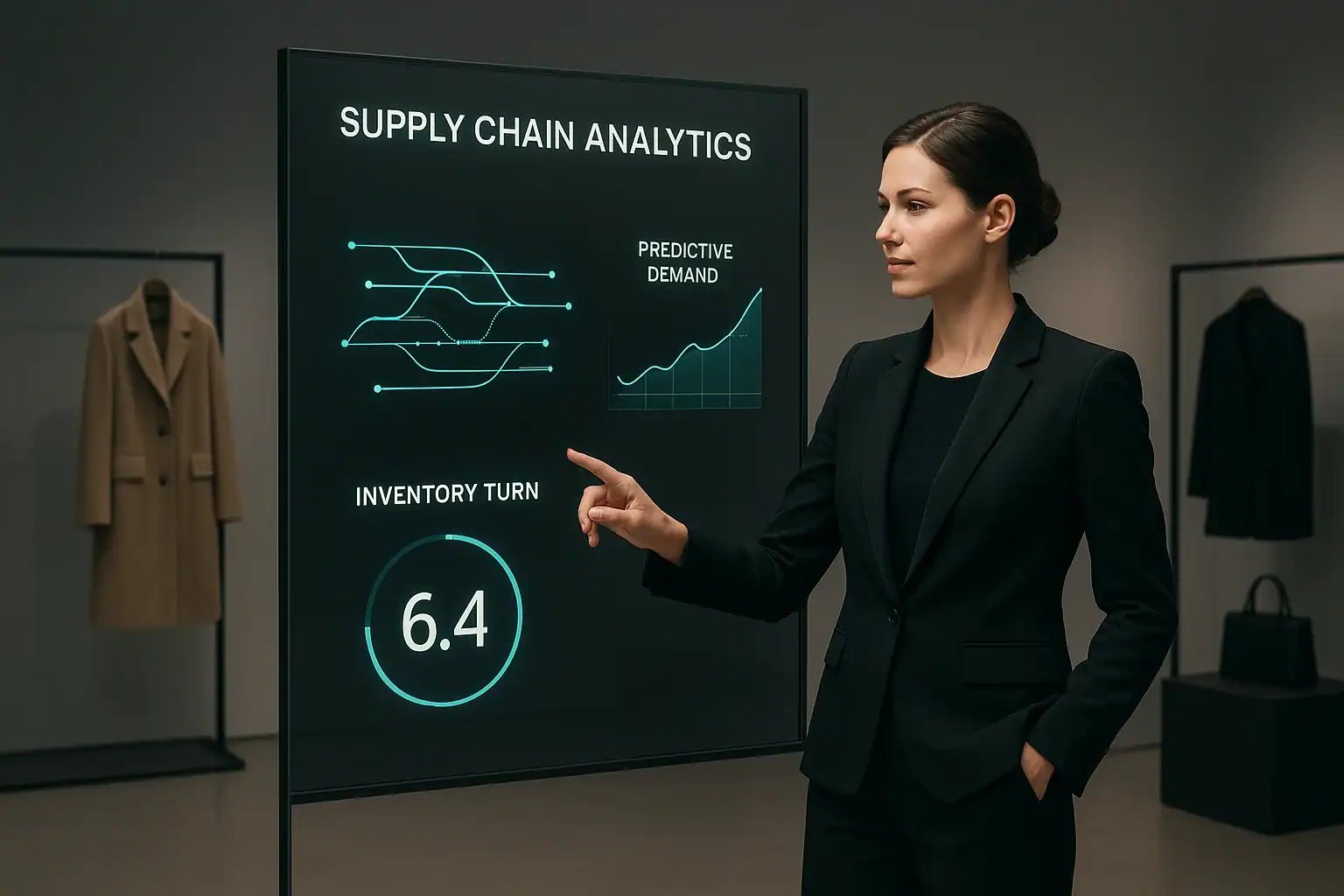
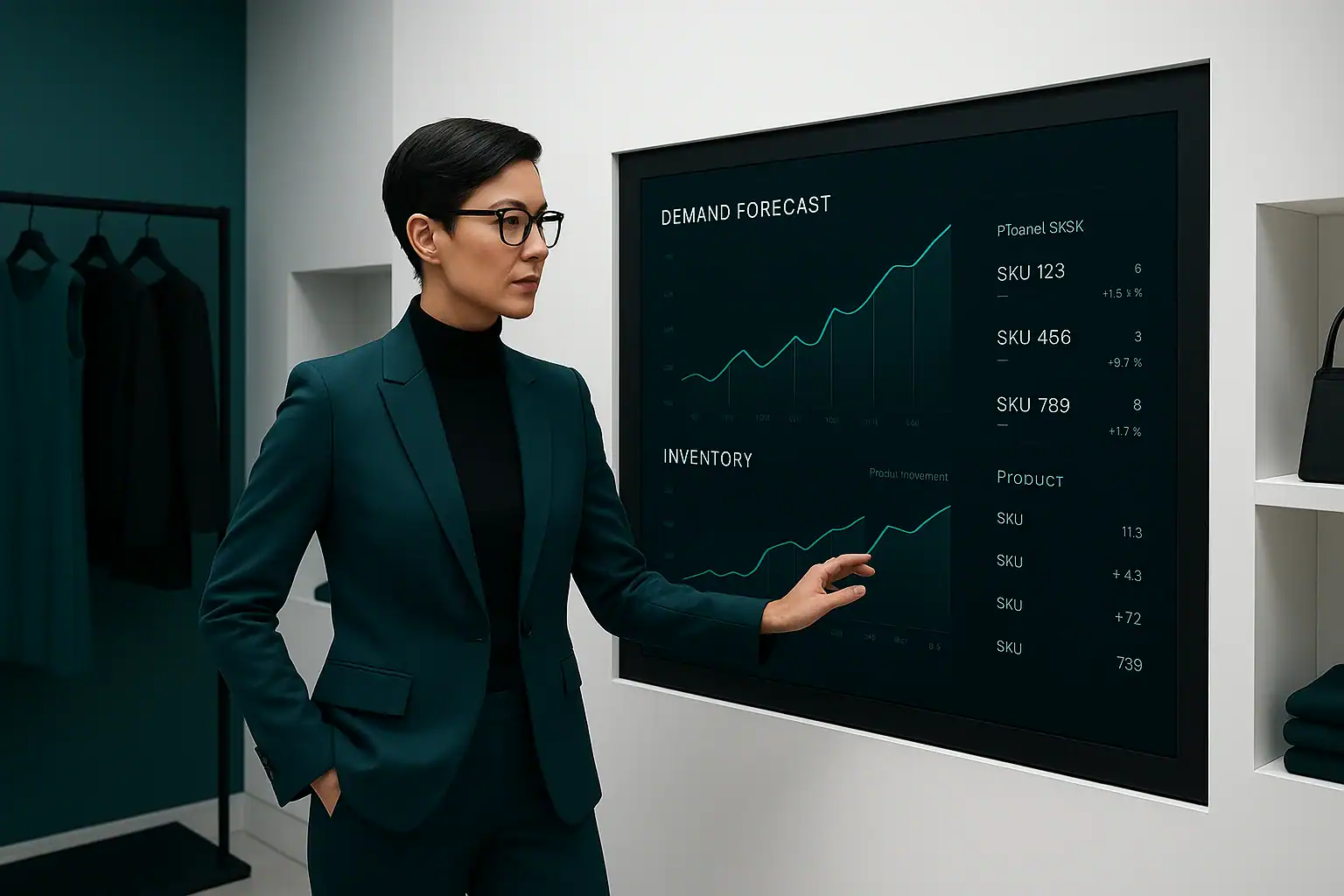
In today’s retail environment, customers don’t see channels, they see a single brand. They expect to buy online and return in-store, check stock levels from their phone before visiting, and receive their orders faster than ever. This seamless expectation creates a significant challenge for retailers operating with siloed inventory systems. When your e-commerce warehouse and physical stores operate as separate entities, you create friction, miss sales, and watch valuable inventory sit idle.
The solution isn’t just about better software, it’s about a fundamental shift in strategy. Mastering omnichannel inventory turnover means treating your entire stock as a single, fluid asset. It’s about ensuring every product has the highest possible chance of selling at full price, regardless of where it is or which channel a customer uses to buy it. This approach transforms inventory from a costly liability into a dynamic, strategic advantage.
Why traditional inventory management fails in unified commerce
Separate inventory pools for online and in-store operations are a relic of a bygone era. This fragmented approach leads directly to common retail pains: stockouts in one channel while another has excess, forcing unnecessary markdowns and eroding margins. Customers who check stock online only to find it unavailable in a nearby store are likely to shop elsewhere, research shows 66% would forgo future trips after such an experience.
To thrive, you need a unified view that connects inventory velocity directly to profitability and customer loyalty. Businesses that successfully implement strong omnichannel strategies retain an impressive 89% of their customers, compared to just 33% for those without. This requires tracking the right metrics that reflect a holistic business.
Measuring true inventory performance goes beyond simple sell-through. Key indicators in an omnichannel world must account for the profitability of your stock across all locations. This is where metrics like Gross Margin Return on Investment, or GMROI, become critical, showing how much gross margin you earn for every dollar invested in inventory.
Building a unified stock pool for seamless operations
A unified stock pool is the foundational pillar of modern omnichannel retail. It means every piece of inventory, whether in a distribution center, a backroom, or on a store shelf, is visible and available to fulfill any order from any channel. This eliminates the artificial barriers that lead to poor customer experiences and inefficient operations.
Implementing a unified stock pool requires overcoming the data silos that plague many retail organizations. Your Point of Sale (POS), e-commerce platform, and warehouse management systems must communicate in real time. This single source of truth is essential for true omni inventory visibility-bopis and ship-from-store enablement. A robust and centralized system ensures that when an item sells in one location, it is immediately reflected across the entire network, preventing overselling and ensuring accuracy.
Optimizing fulfillment with ship from store and dynamic allocation
Once you have a single view of your inventory, you can unlock more efficient and customer centric fulfillment strategies. Ship from store is one of the most powerful tactics, turning your physical retail locations into mini distribution centers. This allows you to leverage store inventory to fulfill online orders, reducing shipping times for local customers and clearing out stock that might otherwise require a markdown.
The real challenge, however, lies in perfecting your allocation strategy. How do you decide which inventory goes where? A static, one size fits all approach no longer works. You need a dynamic model that can intelligently balance inventory between online and offline channels based on real time demand signals. Effective in-season stock allocation ensures that products are moved to the locations where they have the highest probability of selling, maximizing turnover and protecting margins.
The role of advanced technology in inventory velocity
Achieving this level of dynamic control and prediction is nearly impossible with manual processes or traditional software. This is where agentic AI becomes a game changer for retailers. Unlike older systems that rely on historical data alone, AI integrates countless variables like weather patterns, local events, and online trends to forecast demand with far greater accuracy.
AI systems provide the deep insights needed for true fashion inventory management. They can analyze demand patterns to recommend optimal stock levels for every single item at every single location. This is achieved through sophisticated techniques like merchandise channel clustering, which groups stores with similar sales patterns to refine allocation strategies even further.
Effective AI in inventory management automates complex decisions. These systems don’t just provide data, they recommend actionable steps, such as initiating stock transfers between stores or adjusting replenishment orders to prevent overstock. This provides the comprehensive AI inventory management tools multichannel omnichannel visibility necessary to run a truly unified commerce operation.
Achieve optimal inventory turnover with a strategic framework
Adopting a unified, AI-driven inventory strategy is a journey, not a single event. A phased approach ensures a smooth transition and maximizes your return on investment.
Here’s a practical framework for implementation:
- Assessment and goal setting:
Begin by auditing your current inventory processes to identify bottlenecks and data silos, then set clear inventory turnover and GMROI targets.
Select the right tools that can unify your disparate systems, focusing on solutions that offer a single view of stock and powerful analytics.
Update your operational workflows to support new fulfillment models like ship from store and train your teams to leverage real time inventory data.
- Monitoring and continuous optimization:
Use advanced analytics to track your key performance indicators, allowing your AI systems to learn and adapt to shifting market dynamics.
Transform your inventory into a strategic asset
Moving from a fragmented, channel specific inventory model to a unified commerce strategy is no longer optional. It is the definitive way to meet modern customer expectations, reduce waste, and drive profitable growth. By creating a single view of your stock, optimizing fulfillment, and leveraging the predictive power of agentic AI, you can increase inventory turnover and turn a complex operational challenge into your greatest competitive advantage.
Frequently asked questions
Q: What is the first step to creating a unified stock pool?
A: The first step is achieving real time inventory visibility by integrating all your systems where stock is managed, including your POS, e-commerce platform, ERP, and WMS, into a single, centralized platform.
Q: Is implementing a ship from store model difficult?
A: It presents operational challenges, but with the right technology for inventory visibility and order routing, along with proper staff training for picking and packing, it can be a highly profitable fulfillment strategy.
Q: How does AI improve inventory turnover more than traditional systems?
A: AI improves turnover by forecasting demand with greater accuracy, automating replenishment to prevent both stockouts and overstock, and dynamically allocating inventory to where it’s most likely to sell, minimizing the need for markdowns.
Q: Our company uses several legacy systems. Can we still achieve a unified view?
A: Yes. Modern inventory management solutions are designed to integrate with various legacy systems through APIs, allowing you to create a unified data layer without having to completely replace your existing infrastructure.