Evaluating AI inventory solutions can feel like trying to compare engines without being able to open the hood. Every provider promises smarter forecasting and better results, but the crucial difference lies in the technological mechanisms that turn raw market data into actionable intelligence. Without understanding how a system collects, interprets, and explains real time demand signals, you are essentially flying blind, hoping the “magic” works. The reality is, superior performance isn’t magic, it’s the result of superior engineering.
The pace of modern retail leaves no room for guesswork. Traditional forecasting models, which rely on historical sales data and slow batch processing, are no longer sufficient. They can’t react to a viral social media trend, a sudden weather shift, or a local event driving unexpected foot traffic. This reactive approach is precisely why retailers face a constant battle with stockouts and overstock, with AI demand forecasting offering a path to reduce forecast errors by a staggering 20% to 50%. The key is moving from reacting to the past to proactively anticipating the future.
A technical deep dive into the signal to alert engine
To generate truly valuable inventory alerts, an AI must do more than just look at last week’s sales. It needs to perceive the market in real time, processing hundreds of diverse data points simultaneously. This is where an agentic AI company distinguishes itself, not just by providing software, but by delivering an autonomous system that senses, reasons, and acts. This engine is built on a sophisticated, multi stage process.
Weaving the data tapestry how we collect real time demand signals
The accuracy of any prediction starts with the quality and breadth of its data. A robust AI doesn’t just analyze what you sell, it understands the entire ecosystem influencing why you sell it. We build this comprehensive view by weaving together a rich tapestry of internal and external data streams.
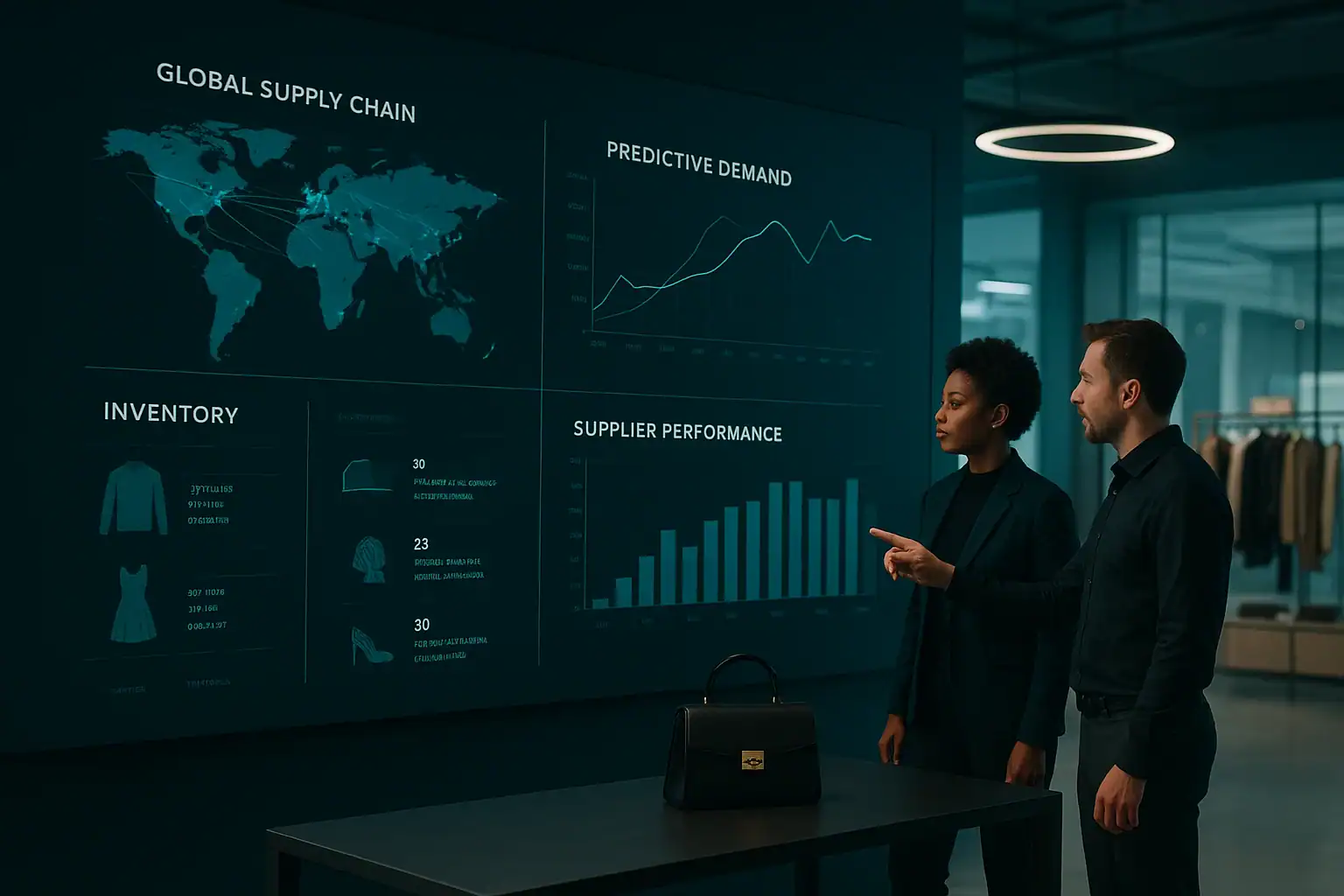
This involves establishing low latency connections to a wide array of sources. Internal data from your POS, ERP, and CRM systems provides a foundational understanding of your operations. But the real predictive power comes from integrating external signals, such as hyper local weather forecasts, social media sentiment, competitor pricing shifts, and even data from IoT sensors. This process of integrating AI features into a retail tech stack is designed to be seamless, creating a single, unified view of market demand.
Interpreting the future with advanced machine learning models
Collecting data is only the first step. The true intelligence lies in interpretation. Instead of relying on a single algorithm, our system uses a hybrid of advanced forecasting machine learning models. This ensemble approach combines the strengths of different models, from classic statistical methods to advanced deep learning, allowing the AI to identify complex patterns that a single model would miss.
This allows for probabilistic forecasting, which doesn’t just predict a single sales number but calculates a range of likely outcomes. It can detect subtle anomalies in demand that signal an emerging trend or a potential disruption. This nuanced understanding is what transforms a simple alert system into a strategic tool for proactive inventory management and intelligent inventory optimization AI.
From insight to action with explainable AI driven alerts
One of the biggest hurdles in adopting AI is the “black box” problem. If your team doesn’t understand why an alert was triggered, they won’t trust it. This is why explainable AI (XAI) is not a feature but a core requirement for any modern retail solution. It’s about building confidence and empowering your team to make better, faster decisions.
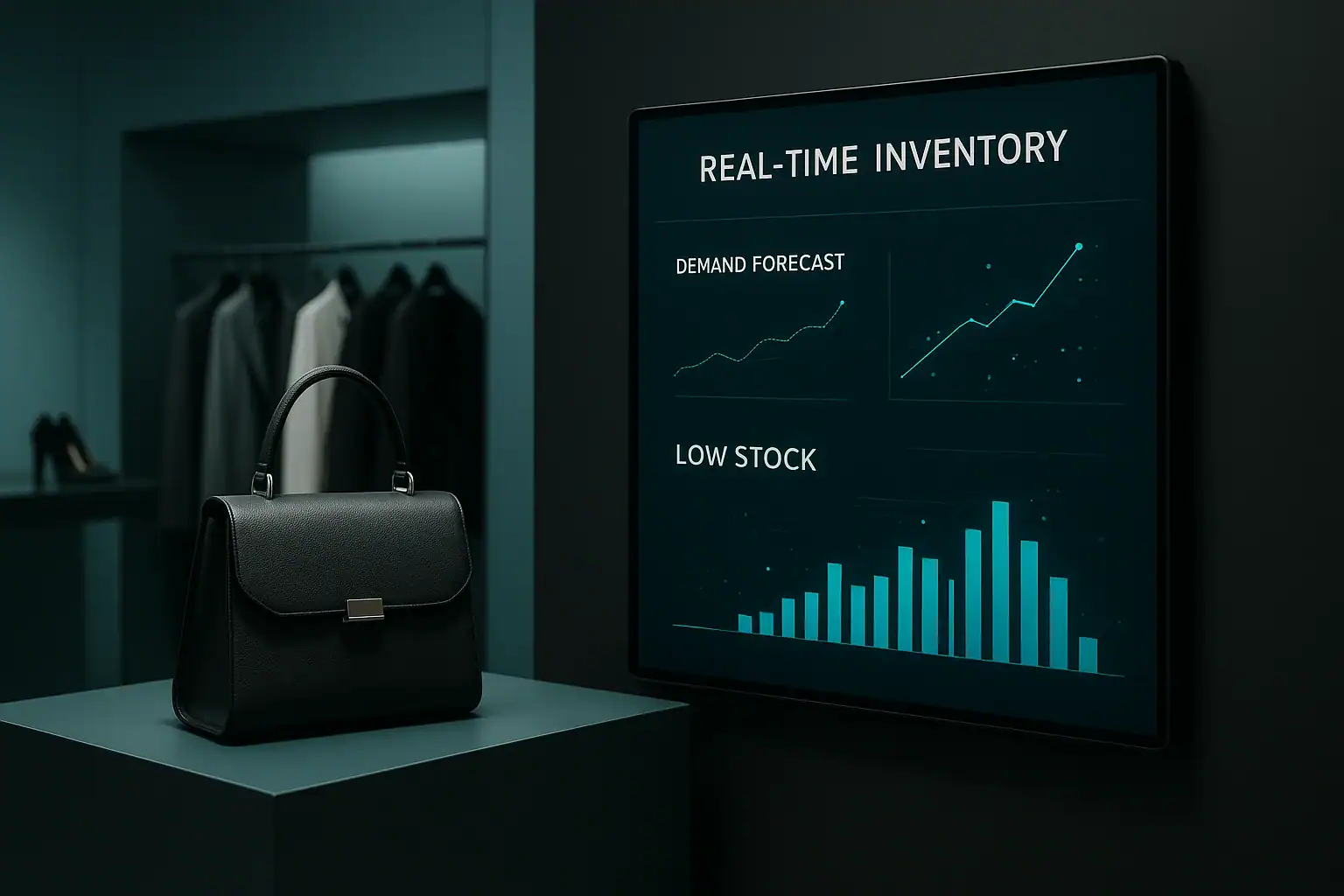
Our system provides clear, human readable rationales for every alert. Instead of just saying “Risk of stockout for SKU 123,” it explains the “why.” For example, an alert might specify that its urgency is driven 40% by a sudden spike in social media mentions, 30% by a competitor running out of stock, and 30% by a local weather event. This level of transparency allows merchandisers to validate the AI’s reasoning and take decisive action, turning data into a trusted advisor. This also extends to creating greater assortment intelligence by understanding the drivers behind product performance.
Unlocking tangible value with precision inventory alerts
Adopting an AI driven approach delivers measurable results that directly impact your bottom line. By shifting from reactive to proactive inventory management, retailers can achieve significant improvements across key performance indicators. The goal is to create a more resilient, efficient, and profitable operation.
These gains are realized through a series of interconnected benefits that stem from improved forecast accuracy and real time responsiveness.
By anticipating demand spikes with greater precision, businesses can reduce stockouts by up to 30%, capturing sales that would have otherwise been lost.
Accurate real-time demand forecasting prevents the accumulation of excess inventory, cutting overstock by up to 25% and reducing carrying costs and markdown pressure.
With fewer markdowns needed to clear unsold goods and more full price sales from having the right product in stock, gross profit gains can increase by over 50%.
Build a more resilient and profitable retail operation
The future of inventory management isn’t about simply having more data, it’s about having clear, trustworthy intelligence that empowers you to act. By moving beyond the limitations of traditional forecasting, you can create a supply chain that is not only efficient but also resilient to market volatility. An agentic AI system provides the visibility and foresight needed to navigate uncertainty with confidence.
When you can see not just what is happening but understand why it’s happening, you unlock a new level of strategic control. This allows you to optimize inventory, protect margins, and consistently meet customer demand. If you’re ready to see how transparent, AI driven alerts can transform your retail operations, we encourage you to schedule a meeting with our team.
Frequently asked questions
Q: How is this different from the alerts in my current ERP system?
A: Traditional ERP alerts are typically based on simple, predefined rules like reorder points or safety stock levels. WAIR.ai’s alerts are dynamic and predictive, generated by advanced AI models that analyze hundreds of real time demand signals, from weather to social media, to forecast future demand instead of just reacting to past inventory levels.
Q: What kind of data is required to get started?
A: We typically start with your core operational data, including historical sales data from your POS system, inventory levels, and product information from your ERP. To enhance predictive accuracy, we then layer on external data streams relevant to your business, a process our team manages to ensure seamless integration.
Q: How quickly can we expect to see a return on investment?
A: While results vary based on operational scale and complexity, clients often see a tangible ROI within the first six months. This is driven by measurable improvements such as a reduction in stockouts of up to 30% and a decrease in overstock by up to 25%, which directly impact sales, reduce carrying costs, and minimize margin eroding markdowns. When it comes to comparing pricing between SaaS AI inventory solutions, it is crucial to factor in this rapid value generation.